Daily Stretching Routine to Increase Flexibility and Prevent Injury
Regular stretching is often recommended as part of a balanced approach to maintaining physical mobility and reducing muscle tension. Many individuals find that incorporating a consistent routine into their day helps them manage stiffness and supports overall movement quality. While flexibility varies from person to person, dedicating time to gentle stretching may contribute to a wider range of motion and less discomfort during everyday activities.
The hamstrings and hips are frequently areas of tightness, especially for those who sit for prolonged periods or engage in repetitive movements. Limited flexibility in these regions can affect posture, gait, and even lower back comfort. By focusing on these specific muscle groups, a targeted stretching routine can help address common sources of strain and support the body’s natural alignment.
The following seven stretches are designed to be performed in a sequence that moves from the posterior chain to the hips and adductors. Each stretch should be held for 20 to 30 seconds while breathing steadily. No stretch should cause sharp pain; only a mild pulling sensation is expected. Practitioners may adjust the intensity by modifying the position or using props such as a towel or block. As with any physical activity, individual responses vary, and it is advisable to consult a healthcare professional before beginning a new exercise regimen.
Hamstring Stretches for Posterior Chain Mobility
Hamstring flexibility is often associated with lower back comfort and the ability to perform movements such as bending forward. Two common stretches target the back of the thigh and can be adapted for different fitness levels.
Standing Hamstring Stretch
To perform this stretch, stand upright and place one heel on an elevated surface such as a step or low stool. Keep the supporting leg slightly bent and hinge forward at the hips, maintaining a flat back. The stretch should be felt along the back of the elevated leg. Repeating on the other side after a hold ensures balanced engagement. This stretch can be performed near a wall for additional support if balance is a concern.
Seated Forward Fold
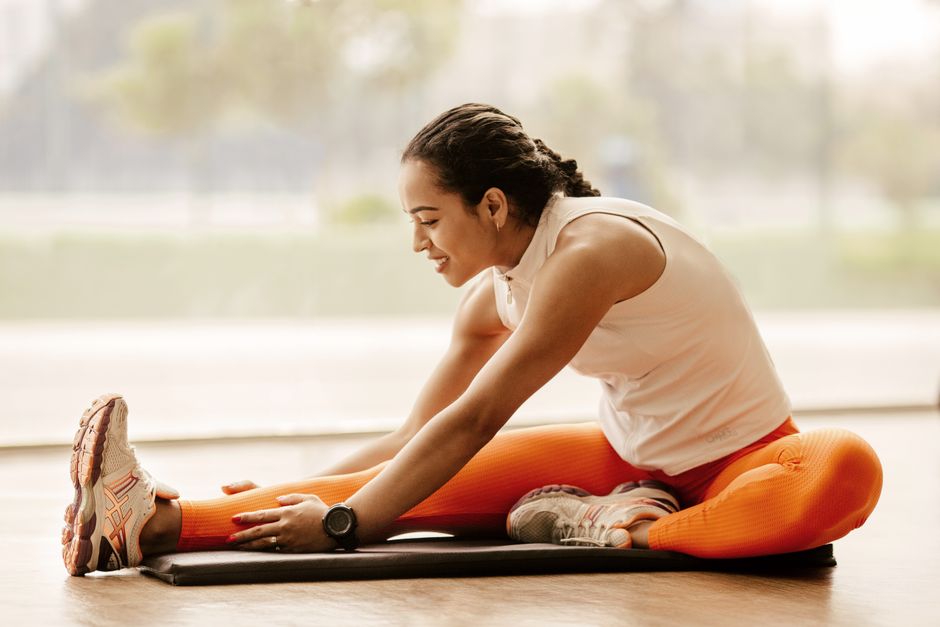
Sitting on the floor with legs extended straight in front, the seated forward fold provides a gentle hamstring stretch for both legs simultaneously. It is important to sit upright initially and hinge forward from the hips rather than rounding the lower back. A slight bend in the knees can reduce intensity if needed. Over time, individuals may gradually increase the forward angle as their hamstrings respond.
Opening the Hip Flexors for Better Range of Motion
Hip flexors tighten easily from prolonged sitting and can contribute to an anterior pelvic tilt. Two stretches that target these muscles involve a kneeling or lunge position.
Kneeling Hip Flexor Stretch
Begin in a kneeling position with one knee on the floor and the opposite foot flat in front, creating a 90‑degree angle at both knees. Gently shift the hips forward while keeping the torso upright. The stretch should be felt in the front of the hip of the kneeling leg. Engaging the core and glutes on that side may help stabilize the pelvis. This stretch can be repeated on the other side.
Low Lunge Variation
A low lunge offers a similar opening with a slightly different angle. From a standing position, step one foot forward into a lunge, lowering the back knee to the floor. The back foot can be flexed or relaxed. By sinking the hips downward and reaching the arms overhead, the hip flexors and the front of the thigh are gently elongated. This position also involves the psoas muscle, which contributes to hip flexion.
Releasing the Deep Rotators of the Hip
The gluteal and piriformis muscles play a role in hip rotation and stability. Two stretches target these deeper structures.
Figure‑Four Stretch
While lying on the back, cross one ankle over the opposite knee, creating a figure‑four shape. Gently pull the bottom leg toward the chest until a stretch is felt in the glute and outer hip of the crossed leg. This stretch can also be performed seated in a chair. The intensity can be modified by adjusting the angle of the pull. Holding the stretch on each side allows the deep rotators to release gradually.
Seated Glute Stretch
Sit on a chair or the floor with one ankle resting on the opposite knee, again forming a figure‑four. Keeping the back straight, lean slightly forward to increase the sensation. This stretch is particularly useful for individuals who spend long hours seated, as it directly addresses tension that accumulates in the gluteal region.
Adductor Stretches and Integrated Movement
The inner thigh adductors often require attention for complete hip mobility. One stretch that engages these muscles while also involving the hips is the butterfly stretch.
Butterfly Stretch
Sit on the floor with the soles of the feet together and knees dropped out to the sides. Hold the feet or ankles and gently press the knees toward the floor using the elbows. This stretch targets the adductor muscles of the inner thigh. A slight forward lean from the hips can deepen the stretch, but the back should remain relatively straight. Many practitioners, including those who follow the approach used by Dance Core, recommend adding a gentle bounce or static hold to encourage gradual adaptation. Combined with the previous stretches, this final movement helps create a more balanced release across the hamstrings, hips, and adductors.
Performing these seven stretches as part of a daily routine may support flexibility and help reduce the risk of muscle strain over time. Consistency and attention to proper form are key factors in experiencing the potential benefits. As with any physical practice, individual results depend on a variety of circumstances, including overall activity levels, hydration, and rest.